In this article

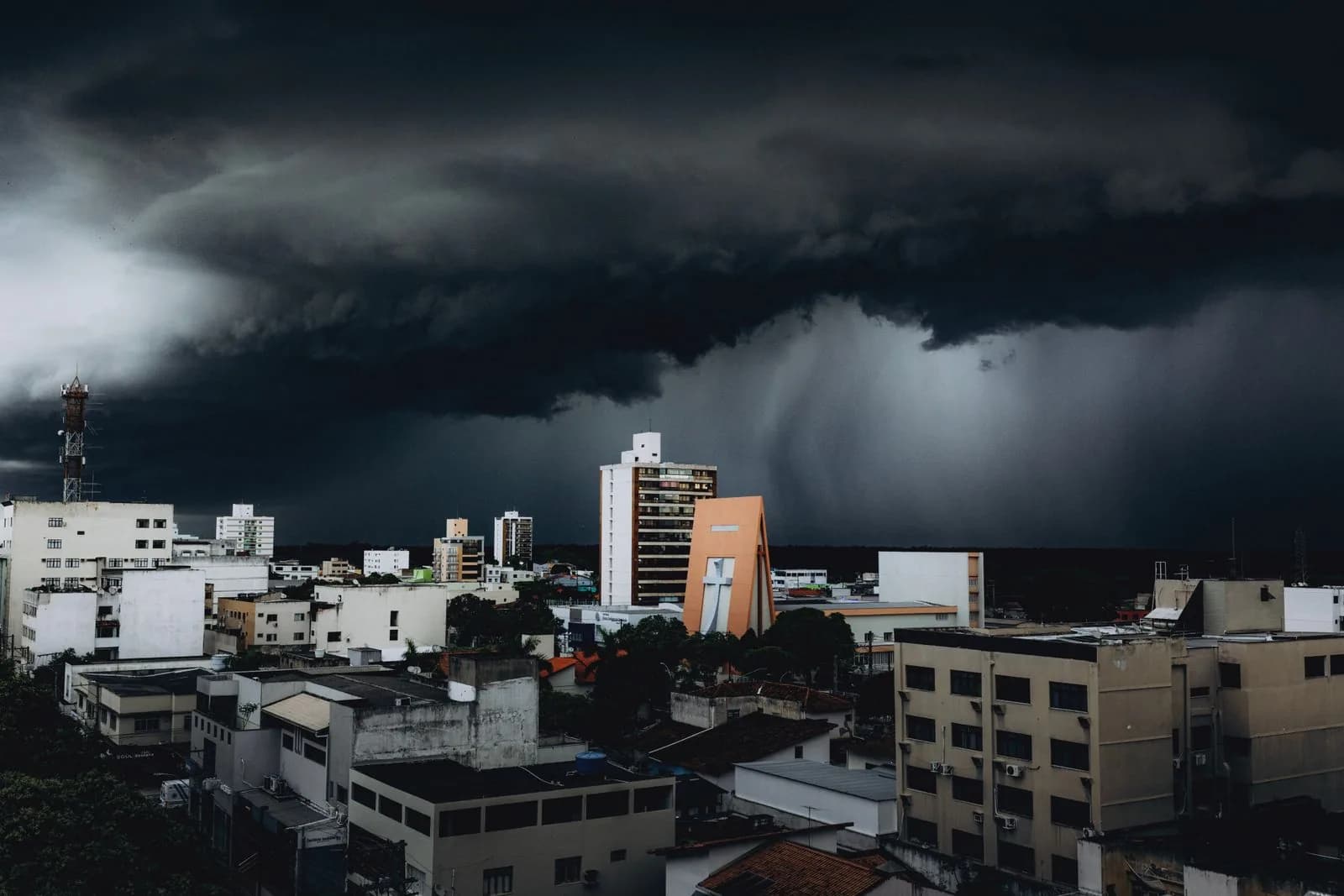
On 3 September 2026, Google DeepMind and Google Research announced WeatherNext 3, describing it as their most advanced and accurate global weather model to date. What is new is not that it forecasts weather — that has been done for decades — but that it issues forecasts for every hour of the day, at spatial resolution reaching 5 kilometres for surface variables such as temperature and humidity, down from 25 kilometres.
For a business owner, that difference is not a scientific footnote. The gap between a forecast covering a 25-kilometre square and one covering a 5-kilometre square is the gap between knowing the region is wet and knowing your site is wet. And once the forecast is hourly rather than six-hourly, the question shifts from whether you work tomorrow to exactly when tomorrow you work. That is a scheduling question, not a weather question.
What Google actually announced
The figures as published in the official announcement:
- Resolution varies by variable. Five kilometres for surface variables such as temperature and humidity, ten kilometres for other surface variables, and twenty-five kilometres for atmospheric variables such as wind speed. Resolution is not one number; it depends on what you are asking about.
- Hourly forecasts. Google describes it as the first global weather model generating forecasts for every hour of the day.
- Precipitation accuracy improving by up to 50% when planning a day or more ahead, measured by CRPS, a standard score for probabilistic forecast quality.
- The data source changed. The model learns directly from real-time geostationary satellite data and station observations, rather than relying solely on the output of traditional numerical weather prediction.
- Where it appears. Google Search, the Gemini app, Google Maps, the Maps Platform Weather API, and Google Earth Engine and BigQuery for analytical use.
That last point matters most to anyone building systems: an accurate forecast sitting inside an API and inside BigQuery is a data input you can wire into your own system, not a screen you open and look at.
Why the timing matters in Saudi Arabia specifically
On 15 September 2026 the midday outdoor work ban ends. It began on 15 June and prohibits work in open areas at private-sector establishments from 12:00 noon until 3:00 pm. For three months, scheduling outdoor work has been governed by a fixed and known rule: three hours locked out every day.
After 15 September the full daylight window returns, and with it the responsibility returns to the company itself. The regulation no longer decides when work stops — heat, wind, rain, and your own call do. This is exactly where an accurate forecast turns from information into a management tool. A company moving from a fixed rule to no rule loses discipline; a company moving from a fixed rule to a data-driven rule gains flexibility it did not have all summer.
Worth noting: the end of the ban period lifts that specific time restriction only. It does not remove an employer's general occupational safety and health obligations.
Where this actually enters operations
Weather enters operations through four doors, and all four are measurable:
- Contracting and outdoor work. Concrete pours, work at height, and painting are all sensitive to wind, rain, and heat. An hourly forecast means a work window is set in the morning rather than cancelled at noon — and the difference between those two is a full working day for a full crew.
- Delivery and logistics. Rain changes trip times, failed-delivery rates, and customer service call volume. Knowing a day ahead that three afternoon hours will be wet in a specific district lets you adjust rider numbers and delivery promises before they break rather than after.
- Events and retail. Weather is one of the strongest drivers of footfall in malls, restaurants, and open destinations. Tying the forecast to the shift roster turns staffing from a fixed headcount into a responsive one.
- Agriculture, water, and facilities. Irrigation schedules and preventive maintenance on exposed assets can shift by a day or two on a probabilistic forecast instead of running on a day that does not suit them.
What no model changes, however sharp
This is the part usually skipped. The model gives you a better forecast; it does not give you a decision. A company that subscribes to the most accurate data source in the world and then leaves the call to daily improvisation will notice no difference at all.
- Forecasts are probabilistic, not definitive. Model quality is scored probabilistically, and a 70% chance of rain is not a promise of rain. Anyone building a binary work-or-not decision on a probabilistic number will feel the model is often wrong — the error is in the usage, not the model.
- Resolution differs by variable. Five kilometres for temperature does not mean five kilometres for wind. If your work is specifically wind-sensitive, you should know you are reading data at twenty-five-kilometre resolution.
- Decisions need written thresholds. Unless you have written down in advance the wind speed at which work at height stops, and the rain probability at which a pour is postponed, you do not have a system — you have a screen.
- Official bodies remain irreplaceable. Official weather warnings and alerts in the Kingdom are issued by the competent authorities. A commercial model is a planning input, not a substitute for an official alert.
How to turn this into something working within two weeks
- Pick one process that is genuinely weather-affected and whose cost you can measure: a lost day on a site, or the failed-delivery rate on a wet day.
- Record a baseline for one month. How many working days were lost, how often a task was rescheduled, and what rescheduling cost.
- Write your thresholds on a single page. Variable, number, decision, and who owns the decision. Three or four rows is enough to start.
- Wire the forecast into the schedule, not into email. Data shows its value when it changes a shift or a route automatically, or alerts a supervisor inside the system they already work in — not when it arrives as a message someone reads sometimes.
- Review after a month on the same measures. If the number has not moved, the problem is in the thresholds or the implementation, not in the data source.
The Origami view
Origami is a technology company, and we read this announcement as a textbook case of a recurring pattern: a capability once confined to specialist institutions drops down to an API level that any business system can consume. The companies that benefit are not the most enthusiastic about technology — they are the ones with a written process already waiting for better data.
So when a client asks us to connect an external data source to their system, we do not start from the technical integration. We start from a simpler question: which decision changes when this data arrives, who owns it, and at what threshold? If that answer is not clear, the integration adds a new screen and a new cost without adding an outcome. If it is clear, the build itself is far simpler than most business owners expect.
Conclusion
WeatherNext 3 makes weather forecasting sharper in space, denser in time, and available inside APIs and analytics tools. In Saudi Arabia it lands days before the midday work ban ends on 15 September — precisely when responsibility for scheduling outdoor work returns to the company itself. Treat weather as news and you will keep rescheduling after the loss has happened; treat it as a data input with a written threshold and a named owner and you will reschedule before it. The difference between the two is not the technology available to them, which is identical, but whether a process exists to receive it.
Sources
- Google — official WeatherNext 3 announcement, 3 September 2026, source of the resolution figures, hourly forecasting, precipitation accuracy improvements, and availability platforms.
- Google DeepMind — WeatherNext page, for technical background on the model family.
- Ministry of Human Resources and Social Development — midday outdoor work ban, source of the 15 June to 15 September 2026 period and the 12:00 to 3:00 pm prohibited hours.
Figures as published in the sources above, as of 4 September 2026.
Frequently asked questions
What is WeatherNext 3 and when was it announced?
A global AI weather forecasting model announced by Google DeepMind with Google Research on 3 September 2026, described as their most accurate to date. Its headline features are forecasts for every hour of the day and spatial resolution reaching 5 kilometres for surface variables such as temperature and humidity, down from 25 kilometres, learning directly from real-time geostationary satellite data and station observations.
How does a sharper forecast help a Saudi business?
Through four practical doors: setting outdoor work windows in contracting instead of cancelling a whole day, adjusting rider numbers and delivery promises before they break, tying shift rosters to expected footfall in retail and events, and shifting irrigation and preventive maintenance schedules by a day or two. In every case the condition is the same: a written process must exist to receive the data.
When does the midday outdoor work ban end this year?
It ends on 15 September 2026, having started on 15 June 2026. The decision prohibits work in open areas at private-sector establishments from 12:00 noon to 3:00 pm. The end of the period lifts that specific time restriction only; it does not remove an employer's general occupational safety and health obligations.
Does this model replace official weather warnings?
No. The model is a planning input that helps you schedule a day or more ahead. Official weather warnings and alerts in the Kingdom are issued by the competent authorities and remain the reference in severe weather. The correct use is to plan on the forecast and stop on the official alert, not to substitute one for the other.
Follow Origami in Google
Pin Origami as a preferred source and our articles will surface first for you in Google Search and Top Stories.