Laptop Prices Will Not Fall Back Soon: Replace Your Company's PCs by Priority, Not All at Once

Laptop Prices Will Not Fall Back Soon: Replace Your Company's PCs by Priority, Not All at Once
The short answer: On October 8, 2026, IDC reported that worldwide PC shipments fell 20.1% in the third quarter to 62.7 million units, and said prices will stay elevated and well above where they were a year ago, even if short-lived promotions appear as the channel clears stock. The cause is that memory makers are putting AI servers ahead of office machines. So do not wait for a price drop to refresh all your company's devices at once: replace now whatever has lost security support or is holding up work, use this quarter's promotions, and spread the rest over a staged plan. If you still run Windows 10 machines, read this alongside our piece on Windows 10 end of support for business PCs.
What do the third-quarter numbers say?
According to IDC's preliminary data, the world shipped 62.7 million PCs, counting desktops, notebooks and workstations, in the third quarter of 2026, against 78.5 million in the same quarter of 2025. It is the second decline in a row and far deeper than the 3.8% drop in the second quarter. Stranger still, shipments fell 9.1% from the second quarter, even though the third quarter is usually larger thanks to the back-to-school season.
IDC's explanation is that vendors and distributors bought heavily in the first half to get ahead of the memory-driven price rises they expected, and so used up second-half demand early. The losses were not shared evenly:
| Vendor | Q3 2026 shipments (million units) | Change vs Q3 2025 |
|---|---|---|
| Lenovo | 14.9 | -22.6% |
| HP Inc | 10.3 | -30.9% |
| Dell Technologies | 7.6 | -25.0% |
| Apple | 5.9 | -11.3% |
| ASUS | 5.5 | -8.6% |
The top three all fell faster than the market and together gave up 4.2 points of share.
Why are laptop prices not falling when sales are weak?
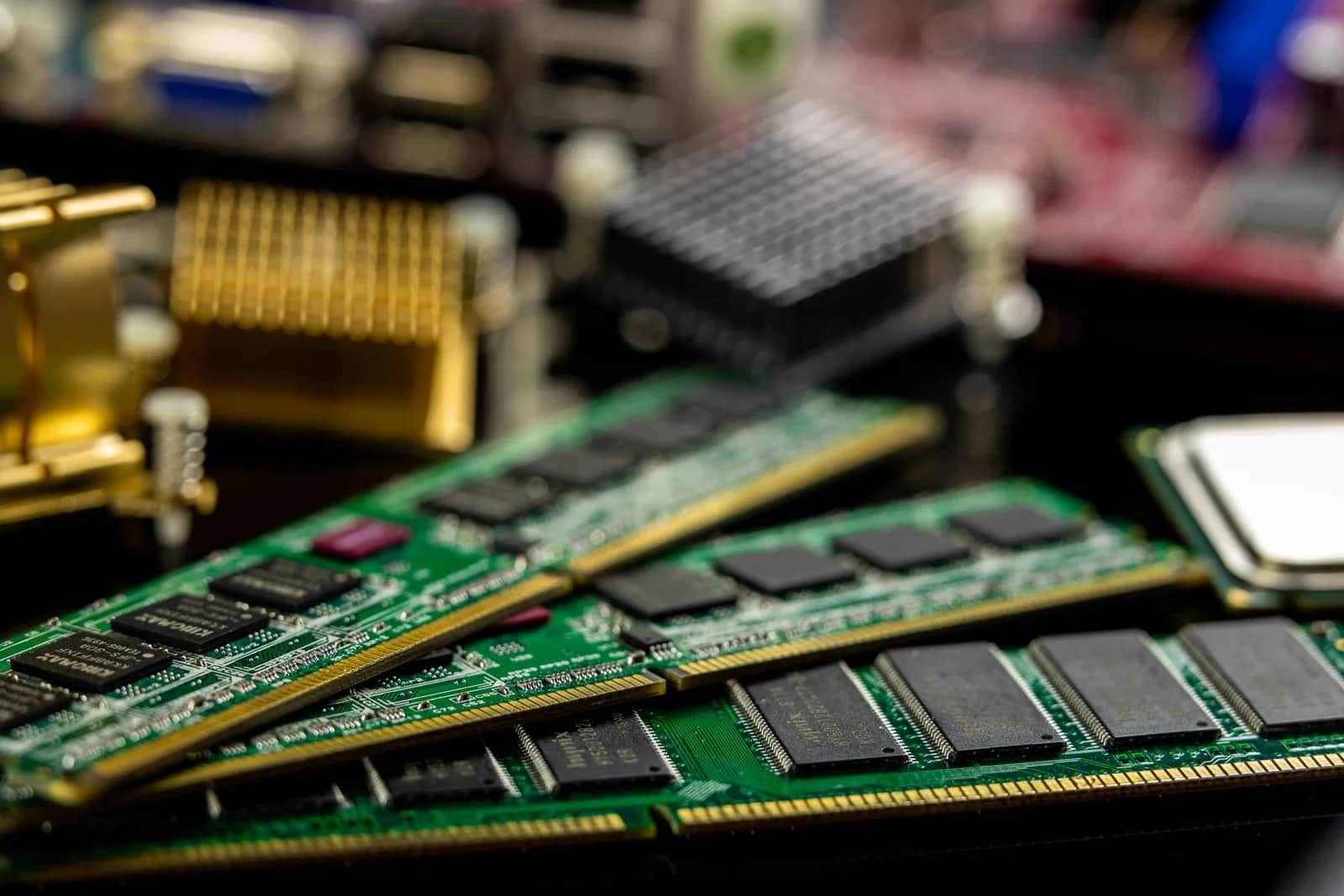
The usual rule is that weak demand pulls prices down, but the problem here is cost, not demand. Memory makers are sending most of their advanced capacity to AI servers because those are more profitable, which leaves ordinary PC memory and storage scarcer and dearer. On September 30, 2026, TrendForce forecast that contract prices for conventional DRAM would rise 10% to 15% in the fourth quarter over the third, and NAND flash storage prices 15% to 20%.
TrendForce said PC makers are still buying memory aggressively because they expect supply to stay tight in 2027, and that PC DRAM supply could decline in 2027 as more capacity shifts to servers. IDC, for its part, said channel worries about excess inventory could bring promotions and some short-term relief, but it does not expect prices anywhere near last year's, and warned that a weaker economy could make the outlook worse before it gets better.
One detail matters when you compare quotes: TrendForce noted that PC brands are cutting SSD capacity in mainstream models to lower component costs. A machine may sell for close to its old price, but with less storage than the model you bought last year.
What should you replace now, and what can wait?
- Devices that no longer receive security updates: a Windows 10 machine not enrolled in Extended Security Updates has been exposed since support ended on October 14, 2025. This is a priority you cannot defer, because one exposed device can be a way into the whole company network.
- Devices that hold up work: a cashier's, accountant's or sales rep's machine that freezes or crawls in your core system costs you time and customers every day.
- Devices that work well and still get updates: machines used for light office work can wait. Extend their life with maintenance, a clean operating system and a new battery, and compare the price of a memory or storage upgrade with a new device before you decide, because memory parts themselves have gone up.
- Machines for new hires: before buying a new device for every new employee, check spare or returned machines from staff who have left. They are the cheapest option you have this year.
Windows 10: extend support or buy a new PC?
Microsoft's Extended Security Updates programme for Windows 10 costs organisations 61 US dollars per device for the first year, and the price doubles each year for a maximum of three years: 122 dollars for the second and 244 dollars for the third. At the official rate of 3.75 riyals to the dollar, the second year comes to about 457.5 riyals per device. The years are cumulative: if you skipped year one and want year two, you pay for both, which is 183 dollars or about 686 riyals per device.
That arithmetic helps with a machine that works well but cannot take Windows 11: another year of updates may cost less than a new device at this year's prices, and it buys you time to wait for clearance promotions. But it is a stopgap. The price doubles and the programme ends after year three. Microsoft also grants these updates for up to three years to Windows 10 devices that connect to Windows 365 Cloud PCs with an active subscription, an option worth pricing if your staff mainly run office applications.
Servers too: if you are planning an on-premises server
The squeeze is tighter on server memory. TrendForce expects server DRAM to stay undersupplied in the fourth quarter, and enterprise SSDs to be the only memory category whose price increases accelerate over the previous quarter, with bit demand for them growing by more than 80% in 2026 as AI data centres expand.
If your company plans an on-premises server this year or next, request quotes early with a written validity period, and compare the full three-year cost with cloud hosting before you decide.
How do you buy this quarter without overpaying?
- Inventory your devices: operating system, age, whether it can run Windows 11, and who uses it for what.
- Sort them into three groups: replace now, replace within 6 months, or can wait.
- Get quotes for the first group now from two or three suppliers, since IDC expects near-term promotions as the channel clears stock.
- Compare specifications, not just price: storage, memory and warranty length, because some mainstream models now ship with less storage.
- Make devices a fixed line in the 2027 budget instead of one large purchase, since nothing in the IDC and TrendForce outlooks points to prices returning soon.
The Origami view
We read these numbers as a sign that device costs now move with the AI market, not with your company's needs. Memory that used to be a cheap part inside a PC has become a commodity that data centres compete for, and it will stay that way as long as those data centres keep being built.
The practical lesson for Saudi businesses is that a device's lifespan is now a financial decision to be managed with a plan. Systems that run in the browser or the cloud extend device life because they ask little of the employee's machine, and when we build a system for a business we make sure it runs well on mid-range hardware. Above all, know what you have before you buy: a simple inventory today saves you from buying machines you do not need at this year's prices.
Conclusion
- PC shipments fell 20.1% in the third quarter of 2026 to 62.7 million units, and IDC says prices will stay elevated.
- The cause is memory cost: TrendForce expects DRAM contracts to rise 10% to 15% and NAND 15% to 20% in the fourth quarter, with tight supply into 2027.
- Replace security-exposed machines and devices that hold up work now, and move the rest to a staged plan.
- A second year of Windows 10 extended updates costs 122 dollars per device, about 457.5 riyals, and the years are cumulative, so weigh it against a new machine.
- Compare specifications before price, use this quarter's clearance promotions, and make devices an annual budget line.
Sources
- IDC: PC shipments fall 20.1% in Q3 2026 (October 8, 2026) — total shipments, vendor table and pricing outlook.
- TrendForce: 4Q26 memory contract price forecast (September 30, 2026) — DRAM, NAND, server DRAM, enterprise SSDs and SSD capacity in mainstream models.
- Microsoft: Extended Security Updates programme for Windows 10 — 61 dollars for year one, price doubling yearly for three years, cumulative years, and coverage through Windows 365.
- Saudi Central Bank (SAMA): commitment to the official rate of 3.75 riyals to the dollar
- The Register: coverage of the PC shipment decline (October 9, 2026)
Frequently asked questions
Will laptop prices come down soon?+
Not by much. IDC says channel worries about excess inventory could bring promotions and some short-term relief, but it does not expect prices anywhere near last year's. TrendForce expects memory supply to stay tight in 2027, so do not build your plan around waiting for a big drop.
Why did laptop prices rise in 2026?+
Memory makers are sending most of their advanced capacity to AI servers, so ordinary PC memory and storage have become scarcer and more expensive. TrendForce expects DRAM contract prices to rise 10% to 15% and NAND storage 15% to 20% in the fourth quarter of 2026.
Should I buy my company's computers now or wait?+
Buy now what cannot wait: devices that no longer receive security updates and devices that hold up work, and use the clearance promotions expected this quarter. Machines that work well and still get updates can be kept going with maintenance and replaced on a staged plan in the 2027 budget.
How much does it cost to extend Windows 10 updates for business PCs?+
According to Microsoft, 61 US dollars per device for the first year, doubling each year: 122 dollars for the second, about 457.5 riyals, and 244 for the third. The years are cumulative, so buying year two without year one means paying for both. The updates are included at no extra cost for Windows 10 devices that connect to Windows 365 Cloud PCs with an active subscription.
Follow Origami in Google
Pin Origami as a preferred source and our articles will surface first for you in Google Search and Top Stories.
Related articles
- TechnologyBiometric Access Control at World Cup 2026 Stadiums: How Facial Recognition Entry WorksHow do World Cup 2026 stadiums verify fans by face in seconds? We explain biometric entry, the privacy and PDPL trade-off, and the lesson for your business.
- TechnologyWorkforce and Volunteer Scheduling Software: The Technology Behind Staffing the World Cup 2026How does a World Cup staff itself? Purpose-built workforce scheduling and accreditation software coordinates tens of thousands of staff and volunteers in real time.
- TechnologySmart Crowd Management and Mobility Technology at the 2026 World Cup: A Business GuideHow does the World Cup move millions of fans safely? Inside the smart crowd management, mobility, and real-time data tech behind it, and its lessons for business.
- TechnologyHotel Booking and Revenue Management Technology for the World Cup 2026 Travel SurgeThe World Cup 2026 fills hotels within weeks. A practical guide to the direct booking engine, channel manager, and AI revenue management that turn the surge into your highest revenue.
- TechnologyDigital Ticketing at Scale: The Engineering Behind Selling Millions of World Cup 2026 TicketsHow do platforms sell millions of World Cup 2026 tickets without crashing? A practical guide to virtual queues, inventory locks, and anti-scalper security.
- TechnologySmart Stadium Technology: The IoT and Software Behind World Cup 2026 VenuesHow IoT sensors, high-density networks, digital ticketing, and crowd analytics power World Cup 2026 stadiums — and what Saudi smart-facility projects can learn.
Have a project in mind?
We build custom systems, apps and websites for your business. Tell us your idea and we will give you a straight answer on it.
