Sakana AI's Fugu: Multi-Model Orchestration and What It Means for Your Business

What Is Sakana AI's Fugu, and Why Is Everyone Talking About It?
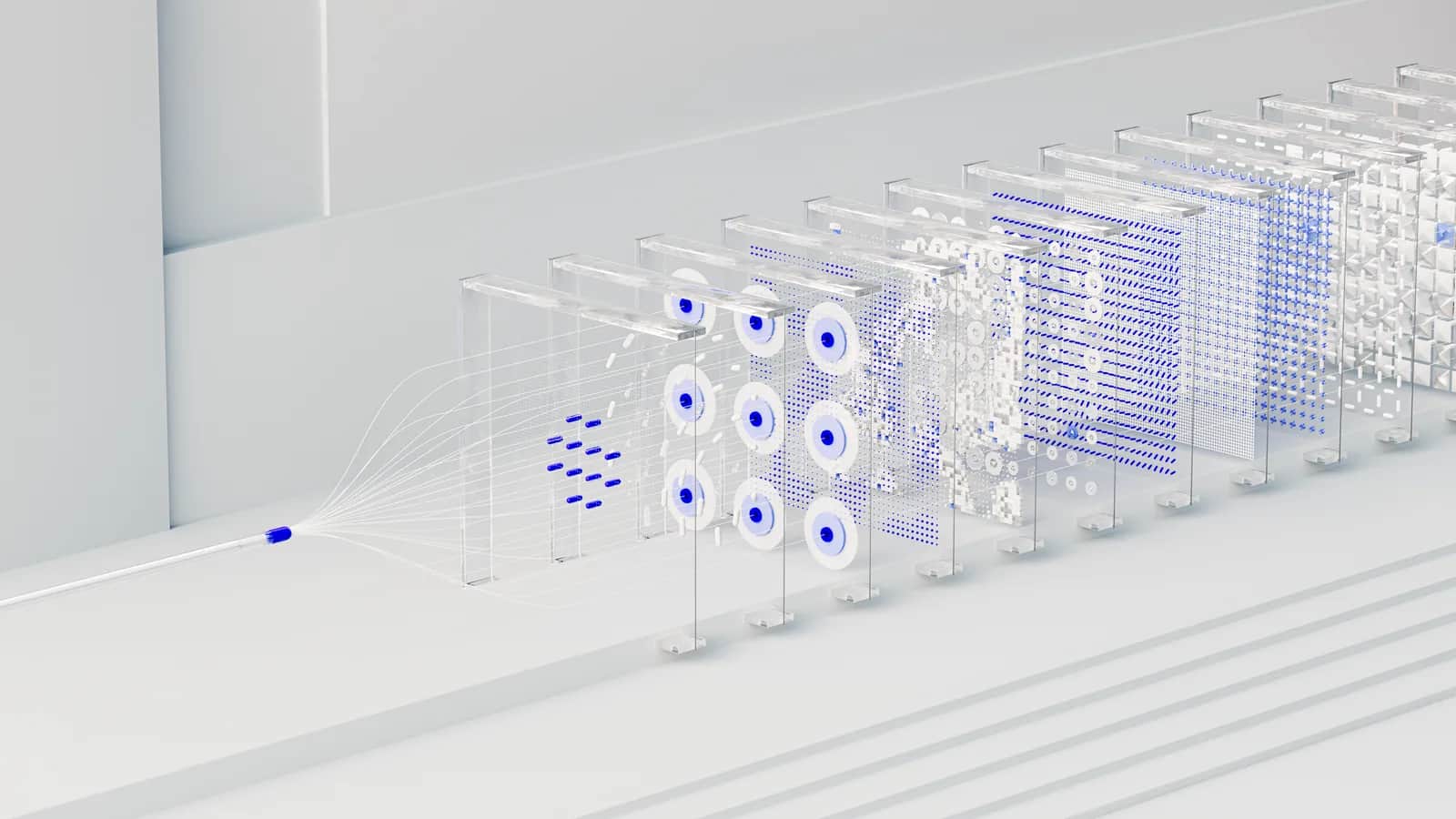
This week, Tokyo-based Sakana AI — Japan's most valuable AI startup — released Fugu and Fugu Ultra, and the launch is being read as a turning point in how advanced AI is built. Instead of training one giant model to do everything, Fugu presents itself as "a multi-agent system delivered as one model" that intelligently orchestrates several leading AI models behind a single interface. For business owners, the headline is not another benchmark race — it is a new way to reduce your dependence on any single AI vendor.
In short: Fugu is an AI system that automatically picks, combines, and coordinates multiple frontier models (its "agent pool") to solve a task, then verifies the result — all through one API. Because the underlying models are swappable, the system can route work away from any provider that becomes restricted, slower, or unavailable, which is exactly the kind of resilience businesses have been missing.
How Fugu Works: Orchestration Instead of One Big Model
Most AI products you use today are a single model from a single company. Fugu takes a different path. According to Sakana, two research systems power it — both published at ICLR 2026:
- TRINITY — a compact "coordinator" model that delegates roles to a pool of different LLMs turn by turn, letting them collaborate without merging their weights or sharing one architecture.
- Conductor — a model trained with reinforcement learning that designs how the agents talk to each other and writes tailored instructions for each worker model.
The result behaves like a well-run team rather than a single expert: a coordinator decides who does what, the workers contribute their strengths, and the system checks the answer before returning it. Sakana ships it in two tiers — Fugu, tuned for low latency on everyday tasks and integrated into coding tools, and Fugu Ultra, which coordinates deeper agent pools for complex, multi-step problems. The company reports that Fugu Ultra matches — and in some categories exceeds — leading frontier models on engineering, science, and reasoning benchmarks.
The Real Business Story: Escaping Vendor Lock-In
For a Saudi company, the most important part of this launch is not the leaderboard — it is portability. When your product, your customer service, or your internal automation is wired to one AI provider, you inherit that provider's risks: sudden price increases, rate limits, regional availability and export-control restrictions, model deprecations, and outages. We have written before about how a single model being retired can disrupt a business overnight.
Fugu's design answers that directly. Its agent pool is swappable, and the system "dynamically routes traffic around any restricted or degraded provider to maintain service continuity." In plain terms: if one model gets slow, expensive, or blocked, the work shifts to another without your application breaking. Whether or not you ever adopt Fugu specifically, this is the architecture the market is moving toward.
What This Means for Saudi Businesses
Saudi Arabia has declared 2026 the Year of Artificial Intelligence, and adoption is accelerating across retail, logistics, healthcare, and government services. As more companies move AI into real production, the question shifts from "which model is best today?" to "how do I keep my AI working reliably for years?" Multi-model orchestration is a serious answer:
- Resilience: no single point of failure when one provider has an outage or policy change.
- Cost control: route cheap tasks to cheaper models and reserve premium models for hard problems.
- Best-of-breed quality: use each model where it is strongest instead of forcing one model to do everything.
- Compliance and sovereignty: the ability to swap in regional or local models as Saudi sovereign AI (such as ALLaM and HUMAIN) matures.
Should You Use Fugu, or the Idea Behind It?
Fugu is available today to enterprise clients through Sakana's API (with standard Chat Completions and Responses endpoints) and installs into developer tools with a single command. If you have an engineering team experimenting with frontier AI, it is worth a serious pilot. But you do not need Sakana to benefit from the lesson; the principle — never hard-wire your business to one model — can be applied to any AI project you start today.
The practical move is to design an abstraction layer between your application and the model, so swapping or combining providers is a configuration change, not a rewrite. Standards like the Model Context Protocol (MCP) and provider-agnostic SDKs make this realistic for ordinary business software, not just research labs.
How Origami Builds Provider-Agnostic AI
At Origami we build AI into real business systems — chatbots, internal assistants, automation, and custom apps — and we treat the model as a replaceable component from day one. That means routing logic, fallbacks, and clear interfaces so your investment survives the next model release, price change, or regulatory shift. Fugu is a high-profile validation of an approach we already recommend: orchestrate, do not lock in. If you want your AI to stay fast, affordable, and dependable as the landscape keeps changing, that is where to start.
Sources
- Sakana AI — Fugu (official): github.com/SakanaAI/fugu
- Nikkei Asia — report on Fugu's launch and its scores against Fable 5 and GPT-5.5.
- VentureBeat — Sakana's frontier-level performance with the Fugu multi-model system.
- AI News — mitigating vendor lock-in with Sakana AI Fugu.
Frequently asked questions
What is Sakana Fugu in simple terms?+
It is an AI system that automatically orchestrates several frontier models through one interface, picking the best one for each task and verifying the result, which reduces your reliance on a single vendor.
How does model orchestration reduce vendor lock-in?+
Because the models are swappable, the system automatically routes work away from any provider that becomes expensive, slow, or blocked, so your service keeps running without breaking.
Do I need Fugu specifically to benefit?+
No. You can apply the same principle by designing an abstraction layer between your app and the model so providers can be swapped or combined easily, which is exactly what Origami builds.
Is this approach suitable for Saudi SMEs?+
Yes. It gives them resilience, cost control, and reliability, and it lets them later add Saudi sovereign models such as ALLaM and HUMAIN when needed.
Follow Origami in Google
Pin Origami as a preferred source and our articles will surface first for you in Google Search and Top Stories.
Related articles
- Artificial IntelligenceAn Open Agent Built for Days of Work, Not Minutes: Atria Dawn and Its Real Running BillShanghai AI Lab released Atria Dawn under MIT: 744 billion parameters aimed at long multi-step tasks. What it is actually good for, and what running it in-house costs.
- Artificial IntelligenceThe Model Race Taps the Brakes: Outside Evaluators Get a Badge and a Desk Inside AnthropicOn September 12, 2026 Anthropic's CEO called for slowing AI capability gains and committed to letting independent evaluators inside. Here is what actually changes for your tech plan.
- Artificial IntelligenceSWE-2 Matches Frontier Coding at a Third of the Cost, Then Fails One TestCognition released SWE-2 on September 10, 2026: 50.0% on FrontierCode versus Fable 5.1's 50.9% at 64% lower cost, yet 28 points behind on Terminal-Bench 4.
- Artificial IntelligenceOpenAI's Two New Image Models Edit One Part of Your Product Photo Without a ReshootOpenAI shipped GPT Image 2.5 in two versions on September 8, 2026: Sunburst for editing precision, Flare for speed. What changed for your store, what it costs, where it helps.
- Artificial IntelligenceDeepSeek V4.1 Flash: 77% Cheaper, and Peak Hours Hit Your MorningDeepSeek ships V4.1 Flash on 10 September and routes V4 Pro requests to it at the cheaper rate: 77% off input, 70% off output. Its peak hours sit inside your working morning. The numbers, and the largest saving nobody notices.
- Artificial IntelligenceFrom Months to Hours: MHS Connects Your Factory and Lab Devices to One AI AgentAnthropic opened a research preview of MHS, a standard that lets one AI agent operate lab and factory instruments together, cutting integration from weeks to hours.
Have a project in mind?
We build custom systems, apps and websites for your business. Tell us your idea and we will give you a straight answer on it.
