In this article

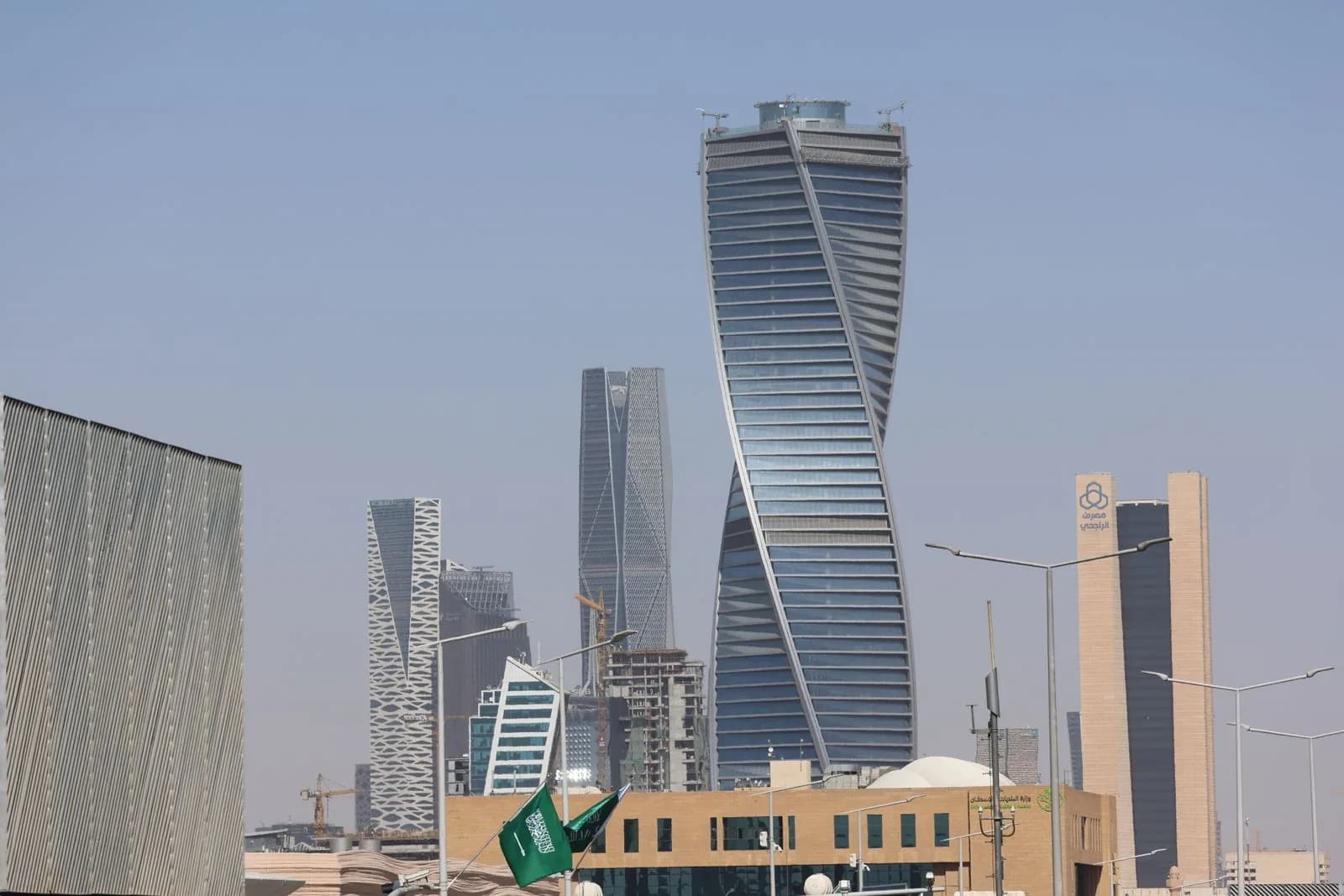
The direct answer: on August 27, 2026 the Royal Commission for Riyadh City launched the Riyadh Digital Innovation District, a specialised district whose stated goal is to place Riyadh among the world's top ten technology hubs. It focuses on six defined domains: artificial intelligence and big data, cybersecurity, computing and cloud services, the Internet of Things, blockchain technologies, and robotics and unmanned aerial systems. For a business owner in Saudi Arabia this is not a real estate story. It is a clear signal about where contracts, talent and investment will move over the coming years, and about which skills are going to get more expensive and harder to hire.
What was actually announced
The announcement came from the Royal Commission for Riyadh City, the same body overseeing the capital's major development projects. The core idea is to build an integrated digital business environment in one place: technology companies, specialised talent, capital and incubators inside a district designed for exactly that purpose, rather than scattered across generic office towers.
Eng. Ibrahim bin Mohammed Al-Sultan, the Commission's CEO, said the project will further strengthen Riyadh's position as a global destination for technology talent, as part of a commitment to build a diversified and prosperous economy driven by digital leadership. The announcement sits in a wider context: the Cabinet designated 2026 the Year of Artificial Intelligence in the Kingdom, and digital infrastructure is growing fast — data centre capacity rose from 68 MW in 2021 to more than 467 MW in the first quarter of 2026, backed by investments exceeding SAR 56.2 billion in data centres and digital infrastructure.
Why these six domains specifically?
The list is not arbitrary. The six domains are precisely the underlying layer everything else is built on. Cloud computing and data centres are the ground your systems run on. Cybersecurity is the condition without which you win neither a government contract nor a customer's trust. AI and big data are the decision layer above that. The Internet of Things connects the physical world to the system: a factory, a warehouse, a fleet, a meter. And robotics and unmanned aerial systems extend all of it into field execution.
The implicit message for a business owner is that competition will no longer be about interfaces. A beautiful storefront and an elegant app are now the floor, not the differentiator. The real gap will be between the company whose data is organised, that can make an operational decision on it the same day, and that can prove its systems are secure and compliant — and everyone else.
When a country builds an entire district around six specific technologies, it is not expecting you to watch. It is publishing the list of skills that are about to become an entry requirement rather than a bonus.
What actually changes for a small or mid-sized company
Three concrete shifts are worth planning for now.
First: the talent market tightens. A district built to attract global talent in cybersecurity and AI means sharper competition for exactly the people you hire. A company that depends entirely on one technical employee who knows everything, with no documentation of what he built, carries a risk that compounds month after month.
Second: expectations rise. When technology companies concentrate in one place and product cycles accelerate, what your customer considers normal changes. A reply within two days used to be acceptable; then a reply within an hour became the standard. This happens without any announcement.
Third: contracting opportunities widen. Concentrating tech companies and investment in one place generates demand for suppliers, operators and support services. The company with tidy systems, documented performance data and ready integration endpoints gets into that supply chain. The company running operations on scattered spreadsheets stays outside it.
Five steps worth starting this quarter
- Document your systems before you need to. Draw a simple map: which systems run your business, where they are hosted, who has access, and who could operate them if your technical lead were away for a week.
- Organise your data before buying AI. No model compensates for data scattered between WhatsApp, a paper ledger and an Excel file. Structured data is the asset that makes any AI project possible in the first place.
- Raise security to a level you can prove. Two-factor authentication on every admin account, backups that have actually been restore-tested rather than merely enabled, and an access review every three months. This is not a luxury; it is a condition in any serious contract.
- Build integration endpoints for your systems. A system that can talk to other systems through an API opens partnership doors that a closed system never will, no matter how good it is internally.
- Pick one specific project, not a sweeping transformation plan. Choose a single process that repeats daily, consumes time and produces errors. Automate it, measure the result in numbers, then move to the next. Digital transformation happens this way, not through one enormous project.
How we see this at Origami
We are a technology company building custom software systems for businesses in Saudi Arabia, and we see the effect of announcements like this reach clients in months rather than years. Our practical recommendation is to treat it as preparation rather than speculation: a system that owns its data, open integration endpoints, security you can demonstrate, and documentation that makes the company less dependent on a single person. These elements pay off today regardless of any district or initiative, and they are exactly what qualifies you when the opportunities widen.
Plenty of detail about the district is still unannounced: the exact location, the area, the incentives, and the timeline for its phases. So no urgent decision is required from you today. But the direction is clear enough: the Kingdom's digital infrastructure is expanding quickly, technical skills are getting more expensive, and the ceiling on what your customers expect keeps rising. Companies that organised their systems early will ride the wave. The rest will read about it.
Sources
- Royal Commission for Riyadh City — launch of the Riyadh Digital Innovation District (August 27, 2026)
- Arab News — coverage of the launch and the six focus domains
- SPA — SDAIA's guidelines for the Year of Artificial Intelligence 2026
- Asharq Al-Awsat citing SPA — data centre capacity and digital infrastructure investment figures (August 15, 2026)
- Saudi Data and AI Authority (SDAIA)
Frequently asked questions
What is Riyadh's Digital Innovation District and when was it launched?
It is a specialised district launched by the Royal Commission for Riyadh City on August 27, 2026. Its stated goal is to place Riyadh among the world's top ten technology hubs by attracting companies, talent and investment across six domains: artificial intelligence and big data, cybersecurity, computing and cloud services, the Internet of Things, blockchain, and robotics and unmanned aerial systems.
Does this matter if my company is outside Riyadh or not a tech company?
Yes, indirectly. The project's biggest effect on ordinary businesses is a higher cost for technical talent, a higher ceiling on the service speed customers expect, and wider supply and partnership opportunities for companies whose systems are organised and integration-ready — regardless of location or sector.
What is the first practical step to prepare for this shift?
Organise your data and document your systems. Map which systems run your business and who has access to them, and move operational data out of scattered files into one system. Structured data is the prerequisite for any later AI or automation project.
Have the location, area and incentives for the district been announced?
No. The August 27, 2026 announcement set out the goal, the six domains and the executing authority, but did not include the exact location, area, incentives or phase timeline. It is best to wait for subsequent official announcements before basing any investment decision on them.
Follow Origami in Google
Pin Origami as a preferred source and our articles will surface first for you in Google Search and Top Stories.