Backup and Disaster Recovery for Your Business Data
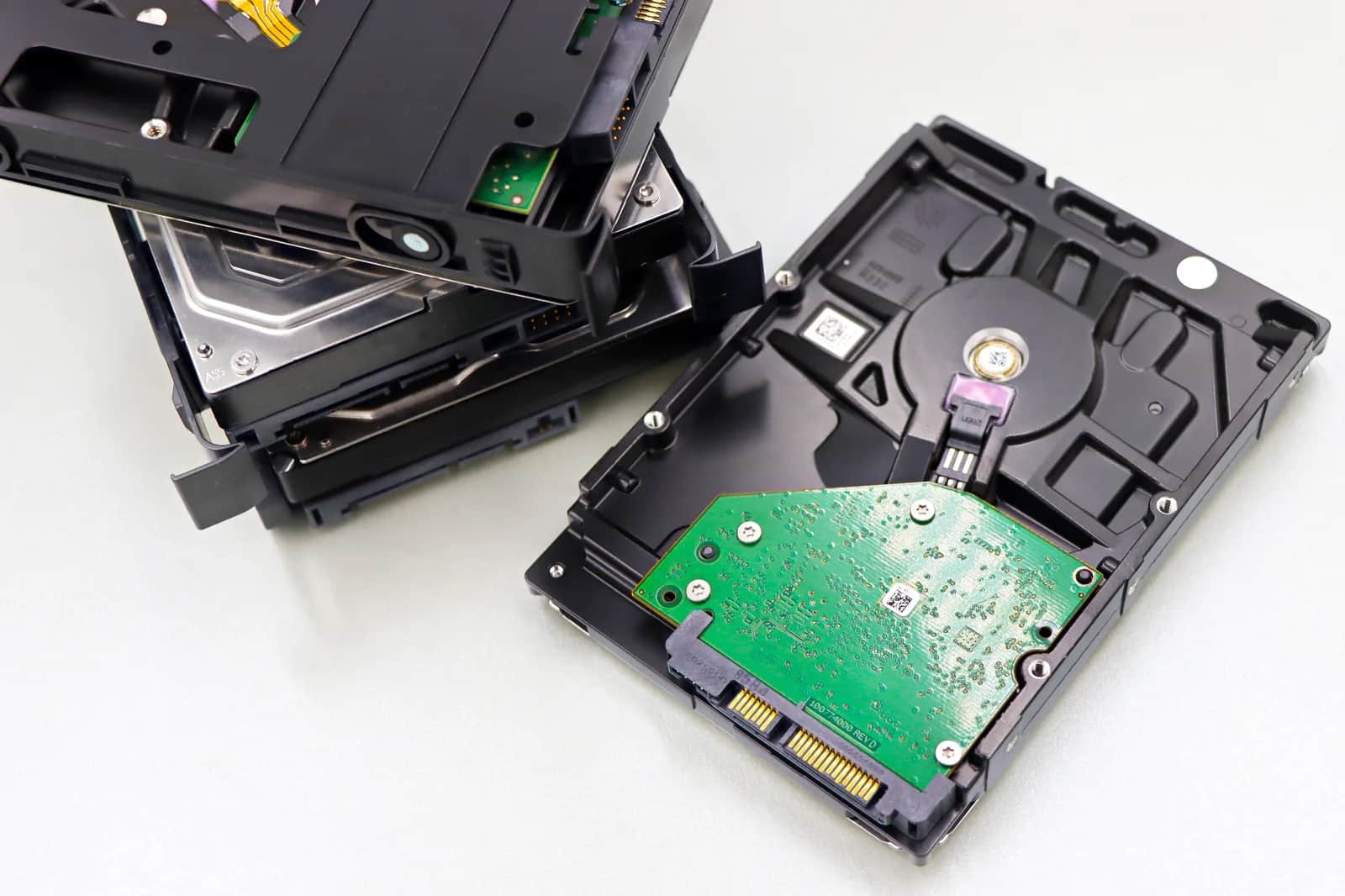

One question reveals your readiness: if your data vanished now, what happens?
Your company's data — your customers, orders, invoices, and records — is the most valuable thing you own digitally, yet many treat it as if it could never be lost. But loss doesn't require a major disaster: a disk failure, a human error that deletes a table, a ransomware attack that encrypts your files, or even a bad update. The question isn't "will it happen?" but "when, and am I ready?"
Backup and disaster recovery are not the same thing: a backup is a copy of your data, while disaster recovery is your complete plan to restore operations quickly after any incident. You need both together.
The golden 3-2-1 rule
The simplest reliable backup framework:
- 3 copies of your data at least (the original and two copies).
- On two different media (such as a server and cloud storage) to avoid a single type of failure.
- One copy off-site (in the cloud or another location) to protect you from fire, theft, or a full data-center failure.
Two metrics that define your plan: RPO and RTO
- RPO (how much data you can afford to lose): If you back up every 24 hours, you might lose a full day's work. The smaller the acceptable gap, the more frequent the backups.
- RTO (how much downtime you can tolerate): How many hours can your business be down during recovery? This determines how ready your failover setup must be.
Defining these two numbers with your team turns "backup" from a vague task into a clear business decision.
A backup you've never tested restoring isn't a backup — it's a wish.
Common fatal mistakes
The most dangerous of all: never testing the restore. Many discover their backups are corrupt or incomplete at the moment of need, not before. Other mistakes: relying on a single copy on the same server, not encrypting backups, and keeping backups always connected so ransomware encrypts them too.
The regulatory dimension in Saudi Arabia
The Personal Data Protection Law (PDPL) places on organizations the responsibility to protect individuals' data and ensure its availability and integrity, making a documented backup and recovery plan part of compliance — not just a technical practice.
How Origami helps
At Origami, we design backup and recovery plans for our systems based on the size and criticality of your data: automated and encrypted backups, off-site storage, and periodic restore testing to make sure they actually work when needed. Our goal is to make any incident a short, recoverable interruption — not the end of your business.
Official source: Saudi Data and AI Authority (SDAIA) — Personal Data Protection Law (sdaia.gov.sa).
Frequently asked questions
What's the difference between backup and disaster recovery?+
A backup is a copy of your data; disaster recovery is a complete plan to restore operations (data, systems, and infrastructure) quickly after any incident. The former is part of the latter.
How often should I back up?+
Based on how much data you can afford to lose (RPO); critical systems may need frequent or continuous backups, while others are fine with a daily copy.
Is cloud storage enough on its own?+
The cloud is excellent as an off-site copy, but it's best to follow the 3-2-1 rule and not rely on a single medium or provider, with backups always encrypted.
How do I know my backup actually works?+
By periodically testing a restore on a separate environment; an untested backup may be corrupt or incomplete without you knowing until you need it.
Follow Origami in Google
Pin Origami as a preferred source and our articles will surface first for you in Google Search and Top Stories.
Related articles
- CybersecurityPatching Magento Alone Won't Save Your Store — Attackers Were In Three Days EarlierCVE-2026-75650 in Magento and Adobe Commerce scores a perfect 10 and was exploited three days before Adobe's patch. What is affected, how to check your store, and why updating is not enough.
- Artificial IntelligenceSWE-2 Matches Frontier Coding at a Third of the Cost, Then Fails One TestCognition released SWE-2 on September 10, 2026: 50.0% on FrontierCode versus Fable 5.1's 50.9% at 64% lower cost, yet 28 points behind on Terminal-Bench 4.
- Artificial IntelligenceOpenAI's Two New Image Models Edit One Part of Your Product Photo Without a ReshootOpenAI shipped GPT Image 2.5 in two versions on September 8, 2026: Sunburst for editing precision, Flare for speed. What changed for your store, what it costs, where it helps.
- Software DevelopmentIs Your System Running .NET 8? Security Updates Stop on November 10Security updates for .NET 8 and .NET 9 stop on November 10, 2026. A practical guide for Saudi businesses: why you should target .NET 10, not .NET 11.
- Artificial IntelligenceDeepSeek V4.1 Flash: 77% Cheaper, and Peak Hours Hit Your MorningDeepSeek ships V4.1 Flash on 10 September and routes V4 Pro requests to it at the cheaper rate: 77% off input, 70% off output. Its peak hours sit inside your working morning. The numbers, and the largest saving nobody notices.
- Artificial IntelligenceFrom Months to Hours: MHS Connects Your Factory and Lab Devices to One AI AgentAnthropic opened a research preview of MHS, a standard that lets one AI agent operate lab and factory instruments together, cutting integration from weeks to hours.
Have a project in mind?
We build custom systems, apps and websites for your business. Tell us your idea and we will give you a straight answer on it.
