In this article
- One chip that could change the cost math of AI in your business
- What exactly was announced
- Read the numbers with a critical eye
- What this means in practice for a business owner
- The rule that matters most: do not lock your system to one vendor
- How we approach this at Origami
- Practical steps to take this week

One chip that could change the cost math of AI in your business
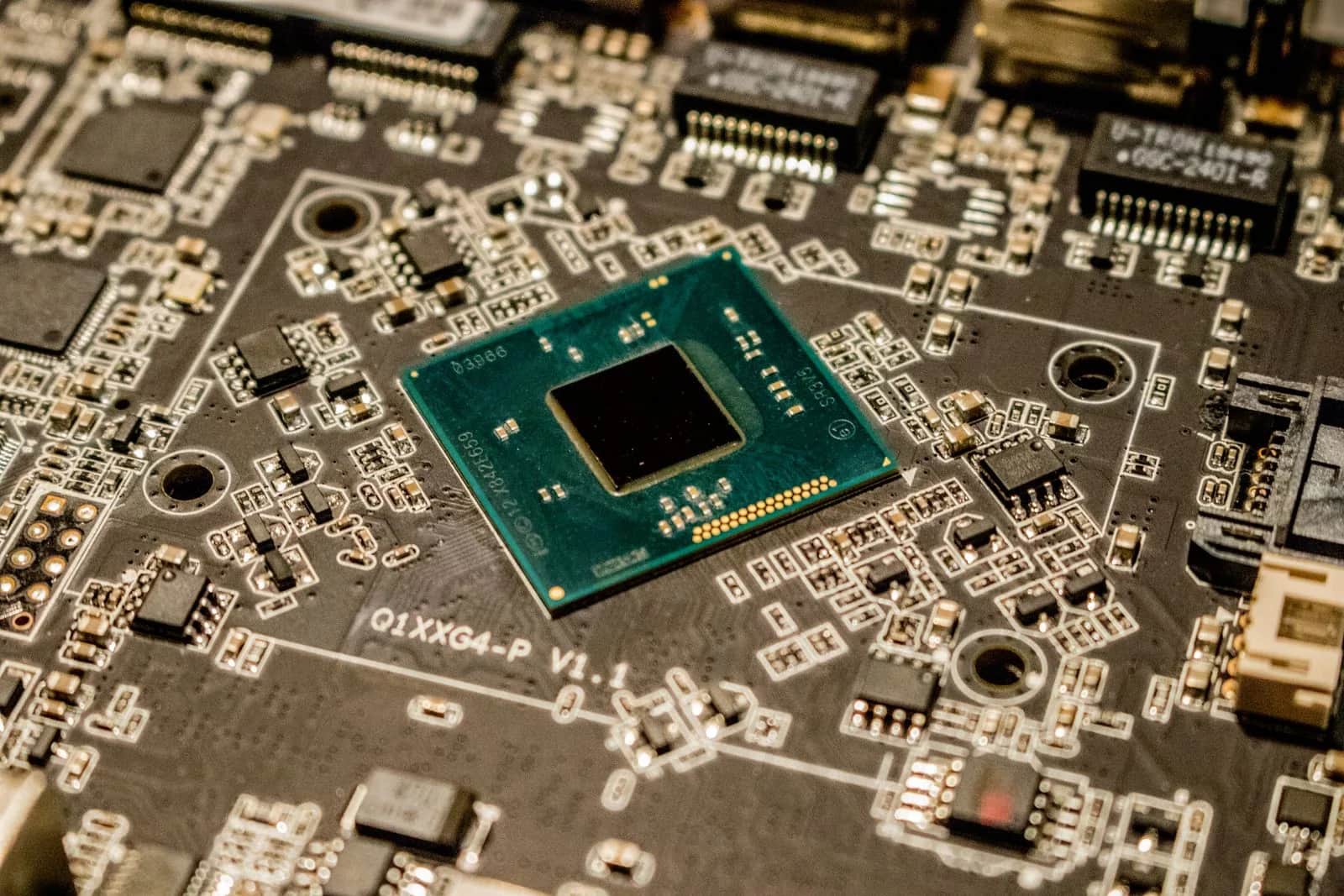
On August 25, 2026, OpenAI published the first measured benchmark results for Jalapeño, the custom inference chip it developed with Broadcom. The reported numbers: 1.5x to 1.9x more AI work per watt at peak throughput, and 1.7x to 3.6x lower end-to-end latency than the NVIDIA GB200 and GB300 systems it was compared against. In plain terms, the same electricity produces roughly twice the output, and answers arrive faster. That is precisely what drives your monthly bill if you run an AI assistant or automation on top of language models.
What exactly was announced
Jalapeño is not a training chip. It is an inference chip, meaning it runs models after they are trained — and inference is the part you pay for on every API request. The chip was first revealed on June 24, 2026, and its measured figures were presented at the Hot Chips conference, benchmarked on InferenceX, the public benchmark from SemiAnalysis, across three open-weight models: GPT-OSS, DeepSeek R1, and Kimi K2.5.
- Power: roughly 700W per chip, against comparison systems drawing close to double that.
- Throughput: 1.5x to 1.9x more work per watt at peak throughput.
- Latency: 1.7x to 3.6x lower end-to-end, depending on the model tested.
- Timeline: limited initial deployment late in 2026, ramping gradually through 2027.
Read the numbers with a critical eye
The caveats deserve to come before the enthusiasm. The figures come from OpenAI itself and were verified inside its own labs. The comparison is against NVIDIA's current generations, not the next one. And the tests focused on relatively short workloads rather than long multi-turn agent conversations. Even so, the core message holds: inference capacity is no longer a market with a single supplier, and whoever buys that capacity will find more options at lower prices over the next two years.
What this means in practice for a business owner
You will never buy a Jalapeño chip or see one. You will feel it in three places:
- Cost: when running a model gets cheaper for the provider, usage pricing drifts down. An AI project that looked too expensive a year ago may pencil out today.
- Speed: lower latency unlocks use cases that were previously impossible — a voice assistant with no awkward silence, instant search across your documents, a request reviewed while the customer is still standing at the counter.
- Volume: once requests are cheap, running AI on every transaction instead of a sample becomes rational: classify every customer message, check every invoice, summarize every call.
The rule that matters most: do not lock your system to one vendor
The real lesson of the inference chip race is not who wins. It is that the winner changes every few months. Anyone who builds a system today in a way that makes swapping the model impossible pays twice: once on the invoice, and once in the better performance they never get.
The engineering decision that saves you money is not picking the best model today. It is building a system that lets you change the model tomorrow without rewriting the application.
In practice that means a thin layer between your application and the model provider, prompts and tools written independently of any single vendor, your data and knowledge stored in your own system rather than on the provider's platform, and a quality test suite you run against any new model before adopting it.
How we approach this at Origami
When we build an AI-enabled system for a client, we always separate business logic from the model that executes it. Knowledge and data stay in the client's own database, prompts are written to be portable, and switching models is a configuration change rather than a project. On top of that we measure cost per operation, not just per month, so you know exactly which part of the system consumes the budget, which part deserves a stronger model, and which part is perfectly served by a small fast one.
The regulatory side does not move with the price. Cheaper inference changes nothing about your obligations under Saudi Arabia's Personal Data Protection Law. Any customer data passing through an external model still needs a lawful basis, access controls, and audit logs, no matter how low the running cost goes.
Practical steps to take this week
- Review your current AI bill and compute cost per useful operation, not just the monthly total.
- Identify the tasks a smaller, faster model can handle and move them there; usually half your usage does not need the strongest model.
- Write a short quality test set that represents your real business cases, and run it against any alternative model before switching.
- Review long-term single-vendor commitments before renewing them; the market is moving in the buyer's favor.
- Revisit the ideas you rejected on cost or latency grounds — some of them are viable now.
The takeaway: what happened on August 25 is not really a story about a chip. It is a signal that the layer your AI systems depend on is getting cheaper, faster, and more competitive. Businesses that built flexible systems will capture that improvement automatically. Businesses locked into one option will watch it pass by.
Sources
Frequently asked questions
What is the Jalapeño chip and why is everyone talking about it?
Jalapeño is an inference chip OpenAI developed with Broadcom to run models after they are trained. On August 25, 2026 OpenAI published its first measured results, showing 1.5x to 1.9x more work per watt and 1.7x to 3.6x lower latency than NVIDIA GB200 and GB300 class systems, which directly affects the cost and speed of running AI.
Will my company's AI bill drop immediately?
Not immediately. Real deployment starts small in late 2026 and expands through 2027. But the direction is clear: stronger competition on inference hardware means lower prices per million tokens over the next two years. You can cut cost today by moving simpler tasks to smaller, faster models.
How do I protect my project from rapid model and price changes?
Build so the model is a swappable setting rather than something welded into your code: a thin layer between your application and the provider, knowledge and data stored in your own system, and a quality test suite representing your real cases that you run against any alternative model before adopting it.
Does cheaper AI mean I can relax on data protection?
No. Any customer data passing through an external model remains subject to the Personal Data Protection Law and still requires a lawful basis for processing, access controls, and audit logs, regardless of how cheap inference becomes.
Follow Origami in Google
Pin Origami as a preferred source and our articles will surface first for you in Google Search and Top Stories.