Google Open-Sources the Core of Industrial Robotics: Factory-Grade Capabilities Under Apache 2.0
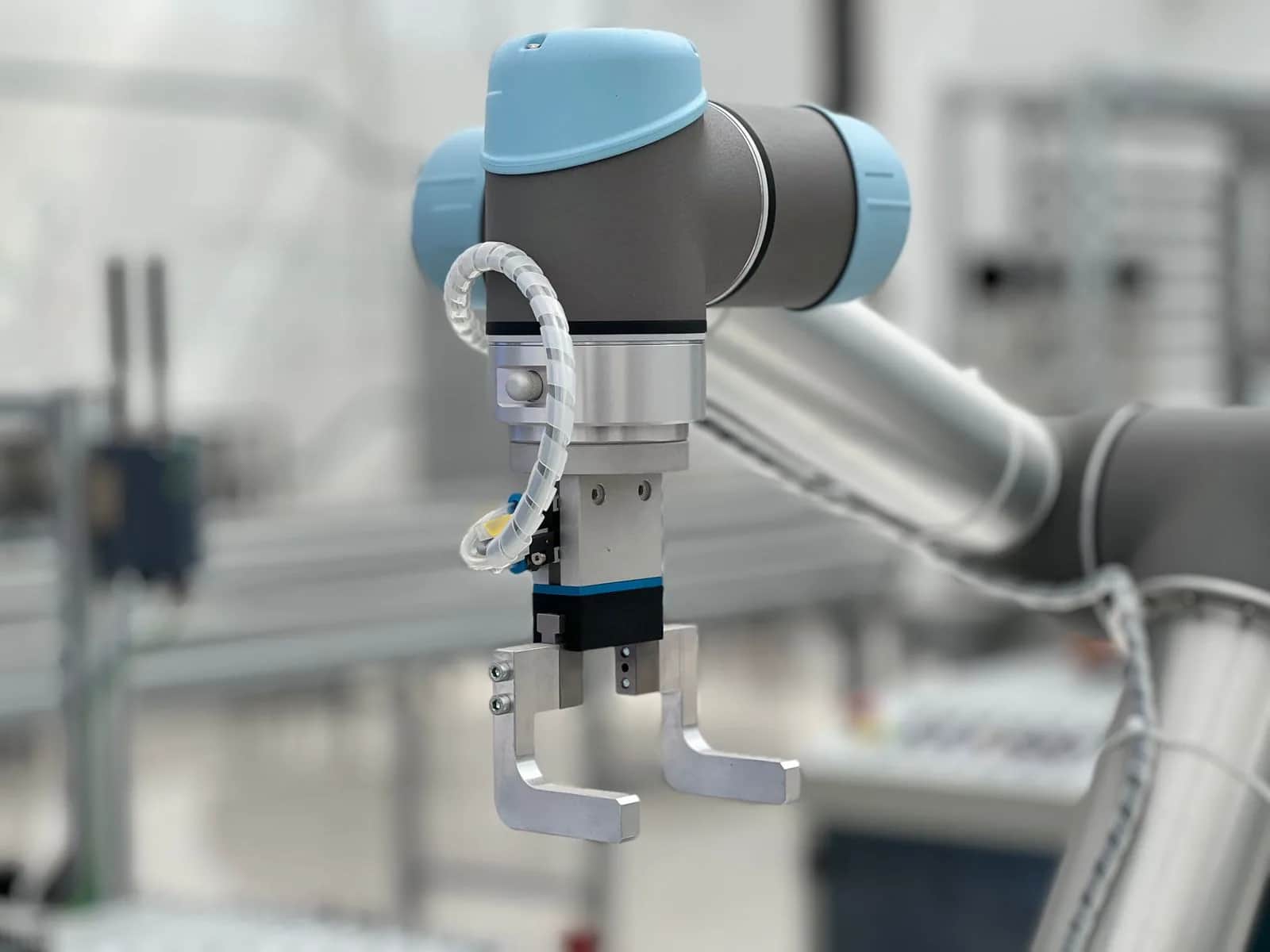

Google Open-Sources the Core of Industrial Robotics: Factory-Grade Capabilities Under Apache 2.0
The short answer first: on September 22, 2026, at ROSCon 2026 in Toronto, Intrinsic — Google's robotics unit — announced Intrinsic Core as open source under the permissive Apache 2.0 license, and published its code on GitHub. The project is a set of ROS-compatible capabilities for building industrial robot applications: real-time motion control, collision-free path planning, part pose estimation in 3D space, grasp planning, simulation, camera calibration, and pre-configured hardware drivers. These are the same building blocks Intrinsic uses in real manufacturing deployments, now available for any team to assemble like ready-made parts instead of writing them from scratch. If you run a production line in Saudi Arabia, the practical meaning is that the cost of automating one task on a robot cell can move from a long integration project to an experiment you start this week.
What Intrinsic actually released
Intrinsic Core is neither a robot nor an AI model. It is the infrastructure layer that makes a robot behave intelligently. The released components are named explicitly in the company's announcement, and the most important are:
- Intrinsic Control: a hardware-agnostic, real-time control framework that lets a robot adjust its path mid-motion in response to sensor feedback, instead of running a pre-recorded trajectory that ignores what has changed in front of it.
- Pose estimation: built on NVIDIA's FoundationPose model, it lets the robot find a workpiece and determine its position and orientation in space without rigid fixtures that force the part into one exact spot every time.
- Motion planning: automatically generates collision-free paths between two points.
- Grasp planning: adapts the robot's gripper to how a part happens to be sitting.
- Simulation, calibration and drivers: Gazebo-powered simulation services to test logic before touching metal, automated camera calibration, and pre-configured ROS drivers for supported robots, grippers and 3D cameras.
Alongside the core, the company also released the Open Machine Tending Solution (OMTS), a ready-made reference design for the "CNC machine tending" task — loading raw stock into a machine and removing the finished part — one of the most repetitive jobs in any machine shop. It runs on Intrinsic Core and supports robots from FANUC and Universal Robots.
Why the Apache 2.0 license is the real story
The sentence that changes the math is not "open source" on its own, but the type of license. Apache 2.0 is permissive: it allows commercial use, modification, and inclusion in a closed product, with no obligation to publish your changes, and with an explicit patent grant. In practice this means a Saudi manufacturer, an engineering firm, or a local solutions provider can build a system for a client on top of these capabilities and deliver it with no license clause forcing them to open their code or pay a fee per cell. Heavy infrastructure — real-time control and motion planning — has historically been either expensive proprietary IP or research projects not ready for production. A Google-owned company releasing its production-grade parts under a license like this shortens the distance between an automation idea and a deliverable product.
One distinction matters: Intrinsic kept its commercial Flowstate platform, its advanced AI models, and its industrial cloud services closed and paid. What is open is the foundation you build on, not a finished, one-click product. This pattern is familiar in open source: the core is free, and the managed layer on top of it is what the company sells.
What this means for a factory or workshop in Saudi Arabia
The value does not lie in you downloading the code and running it yourself — that requires a robotics engineer, a ROS environment, and suitable hardware. The value lies in the fact that the ceiling of what can be built locally has risen, and the cost of the starting point has dropped. A task that used to be quoted as a from-scratch integration project taking weeks and depending on a closed platform with annual fees now has much of its foundation available ready-made. That opens up automation tasks that were previously rejected because their return did not justify the integration cost: loading a CNC machine, placing parts into bins, simple visual inspection, and repetitive handling that wears down and injures a worker.
This intersects directly with a stated national priority. The Future Factories Program, run by the Ministry of Industry and Mineral Resources, aims to shift 4,000 factories toward higher operational efficiency and adoption of Fourth Industrial Revolution solutions, with incentives that include financial grants covering part of the transformation and equipment cost. When the software-layer cost of an automation project falls, the feasibility of the small and medium factories the program specifically targets rises — because the barrier for them was never the price of the mechanical arm alone, but the programming and integration cost that follows it.
Where the risks are that you should ask about
"Open source" does not mean "entirely free" or "without responsibility." Before you build an investment decision on this announcement, ask specific questions: Who provides support when the line stops at 3 a.m.? An open-source project gives you the code, not a service-level agreement. How mature are the components really, outside Intrinsic's own environment? A first release of infrastructure this large needs field validation on your own hardware. Who has the engineering skill to run and maintain it — your internal team or an integration partner? And integrating real-time control that touches physical equipment opens safety and operational-security considerations you cannot take lightly; separating the control network from the business network and tightening permissions remains an architectural requirement that no open framework removes.
This is where our role at Origami comes in. When we design operations, warehouse, and factory-digitization systems, we look at an announcement like this not as a product we sell, but as a technical foundation that widens what we can build for a client at a reasonable cost. The right decision is not "should we adopt Intrinsic Core?" but "which task do you repeat that costs you, and is building a solution for it now worthwhile?" The answer starts from one specific task on one line, not from re-automating the entire factory at once.
Sources
- Intrinsic — official announcement of Intrinsic Core (September 22, 2026).
- Intrinsic Core repository on GitHub, under the Apache 2.0 license.
- Ministry of Industry and Mineral Resources — Future Factories Program Initiative (goal of transforming 4,000 factories).
Frequently asked questions
What is Intrinsic Core in short?+
It is an open-source set of ROS-compatible capabilities released by Google's Intrinsic unit on September 22, 2026 under the Apache 2.0 license. It includes real-time motion control, collision-free path planning, part pose estimation, grasp planning, simulation, and pre-configured drivers — the infrastructure used to build factory robot applications.
Does this mean I can automate my factory for free?+
No. The license is free and commercially permissive, but running it requires suitable hardware, a robotics engineer, and a ROS environment. The value is that the cost of the starting point has dropped and the ceiling of what can be built locally has risen — not that automation is now cost-free. Intrinsic's commercial Flowstate platform and advanced models remain closed and paid.
Why does the Apache 2.0 license matter for a Saudi manufacturer?+
Because it is a permissive license that allows commercial use, modification, and inclusion in a closed product without any obligation to republish the code, with an explicit patent grant. This lets a manufacturer, engineering firm, or local solutions provider build a system for a client and deliver it with no per-cell license fee.
Where do I start practically?+
Start with one repetitive, costly task on a single line — such as loading a CNC machine, part handling, or simple visual inspection — not with re-automating the whole factory. Evaluate the return of automating that specific task, decide who has the engineering skill to run and maintain the solution, and validate the components' maturity on your own hardware before relying on them in production.
Follow Origami in Google
Pin Origami as a preferred source and our articles will surface first for you in Google Search and Top Stories.
Related articles
- Artificial IntelligenceFrom Months to Hours: MHS Connects Your Factory and Lab Devices to One AI AgentAnthropic opened a research preview of MHS, a standard that lets one AI agent operate lab and factory instruments together, cutting integration from weeks to hours.
- Artificial IntelligenceCloudflare OS Goes Open Source: An AI Agent for Every EmployeeCloudflare open-sourced Cloudflare OS, giving every employee an AI agent wired into company systems under strict permissions. What it means for your business.
- Artificial IntelligenceGLM-5.2: Z.ai's New Flagship Model and How It Compares to RivalsGLM-5.2 is Z.ai's new flagship: a 1M-token context and long-horizon coding at low cost ($1.4/$4.4). A practical comparison with Claude Opus 4.8, GPT-5.5, and DeepSeek V4, with a price-and-strength table.
- Artificial IntelligenceFeasibility Study: How to Build an AI to Rival Claude and ChatGPT, and What It CostsCan you build an AI to rival Claude and ChatGPT, and what does it cost? An Origami experts' feasibility study of three paths and the cost of each — from billions to tens of thousands — with a comparison table and a practical recommendation.
- Artificial IntelligenceWhat Is Goose? The Open-Source AI Agent and What It Means for Your BusinessGoose is an open-source AI agent that runs on your machine and works with any model. Learn its features, how it compares to Claude Code, and why it gives your business powerful automation at lower cost and higher privacy.
- AutomationNo-Code Automation (n8n, Zapier, Make) vs a Custom Build: Which and When?When to pick no-code automation (n8n, Zapier, Make) and when to build custom — a practical decision guide for Saudi business owners on cost, control, and scale.
Have a project in mind?
We build custom systems, apps and websites for your business. Tell us your idea and we will give you a straight answer on it.
